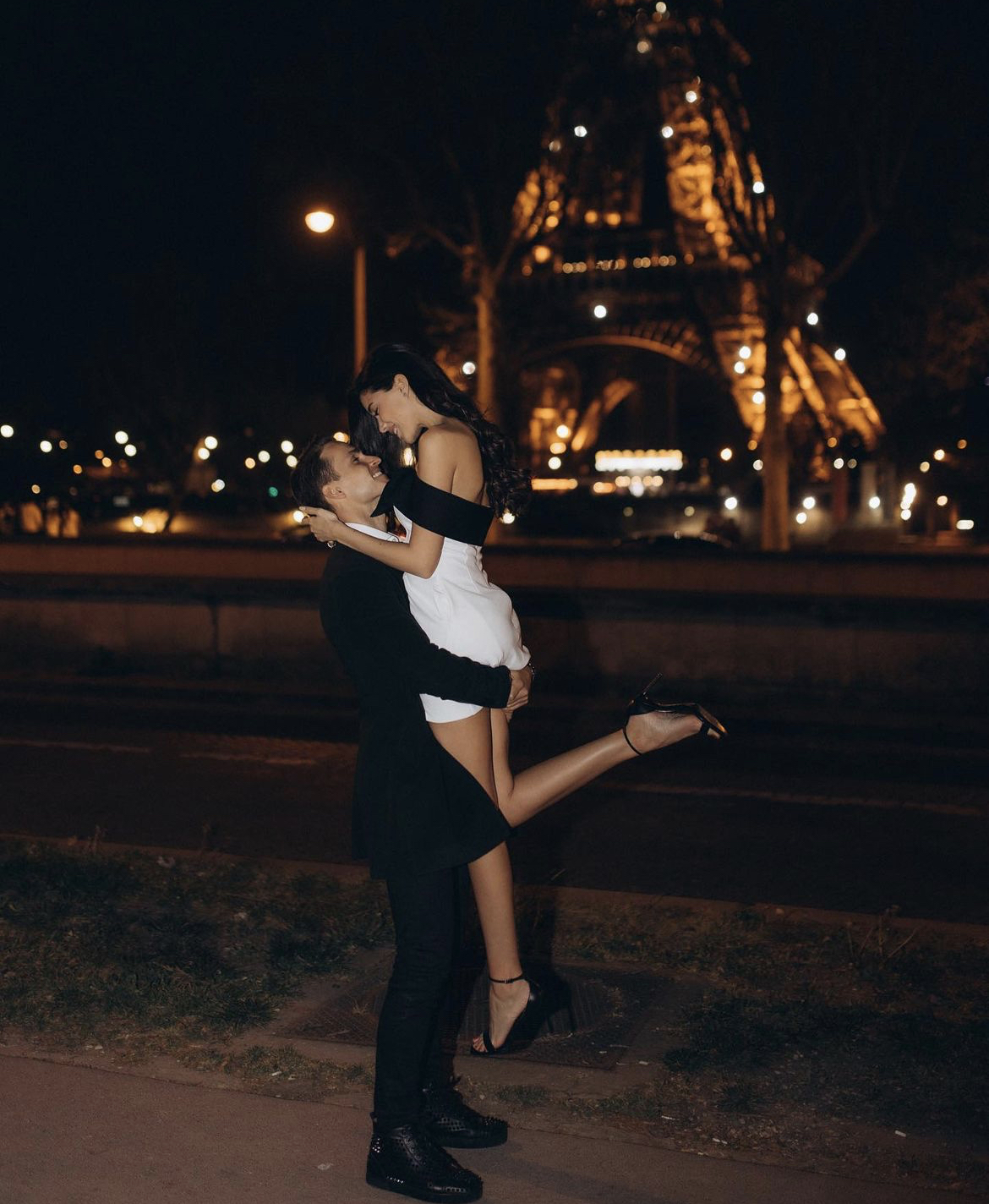
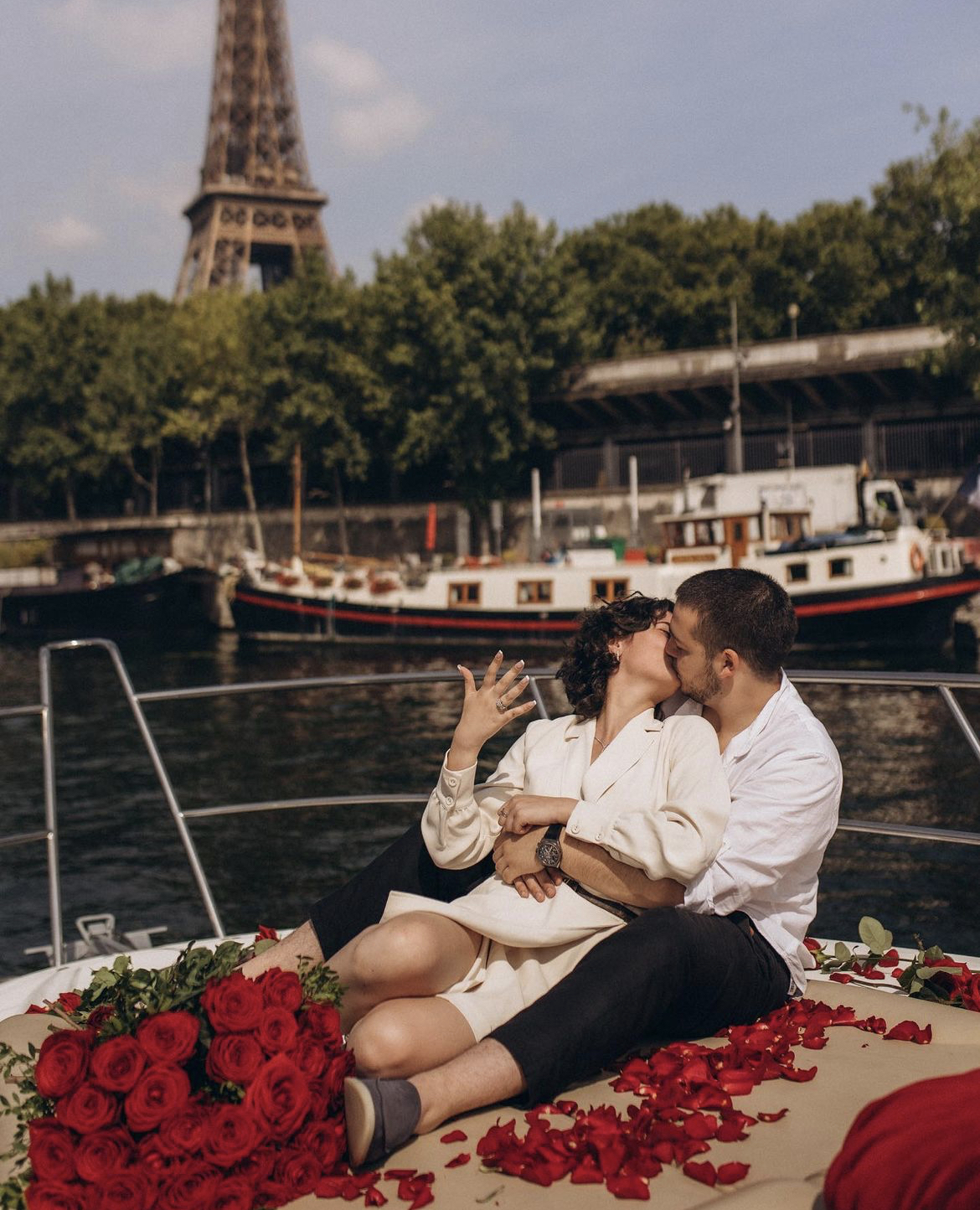
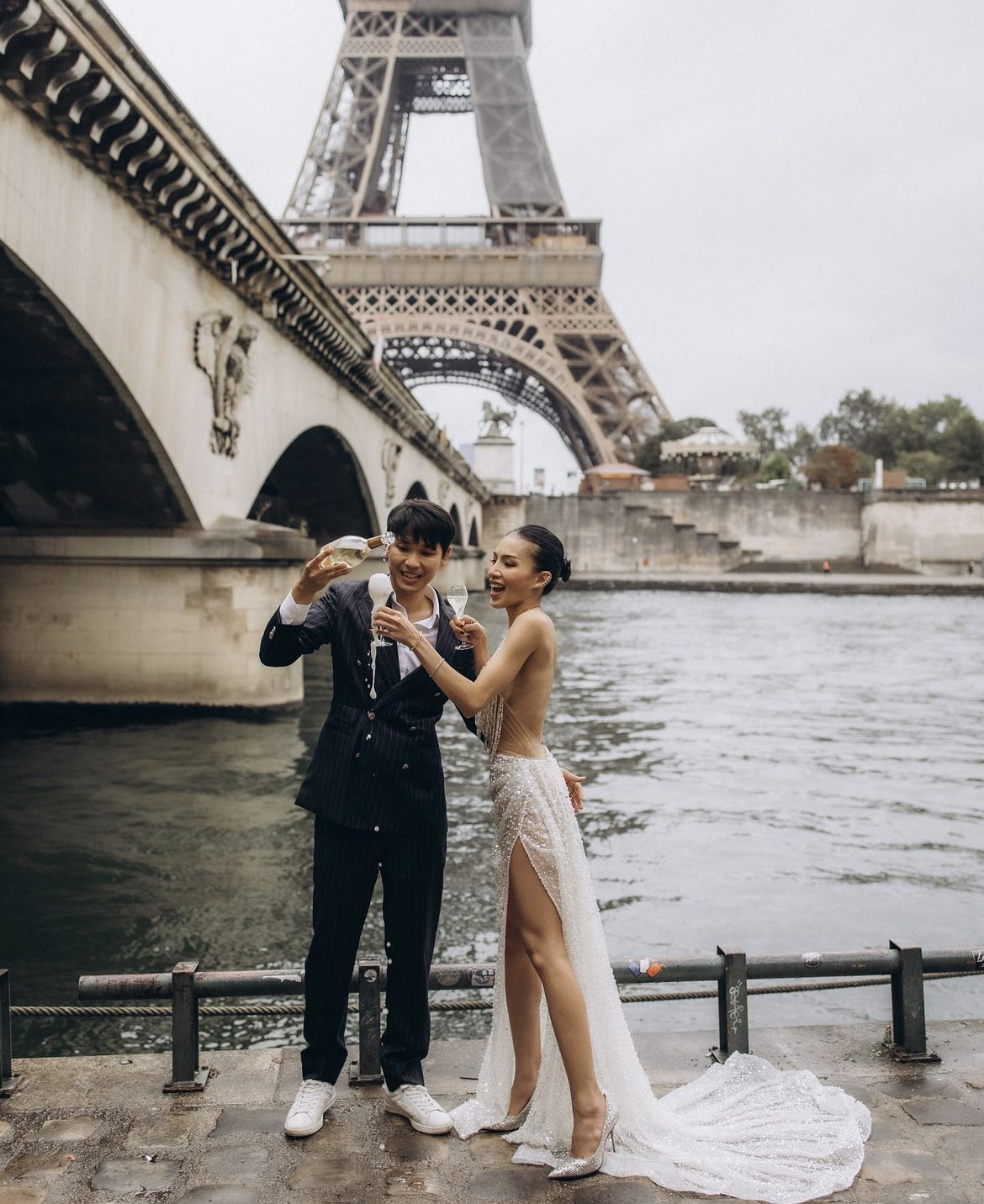
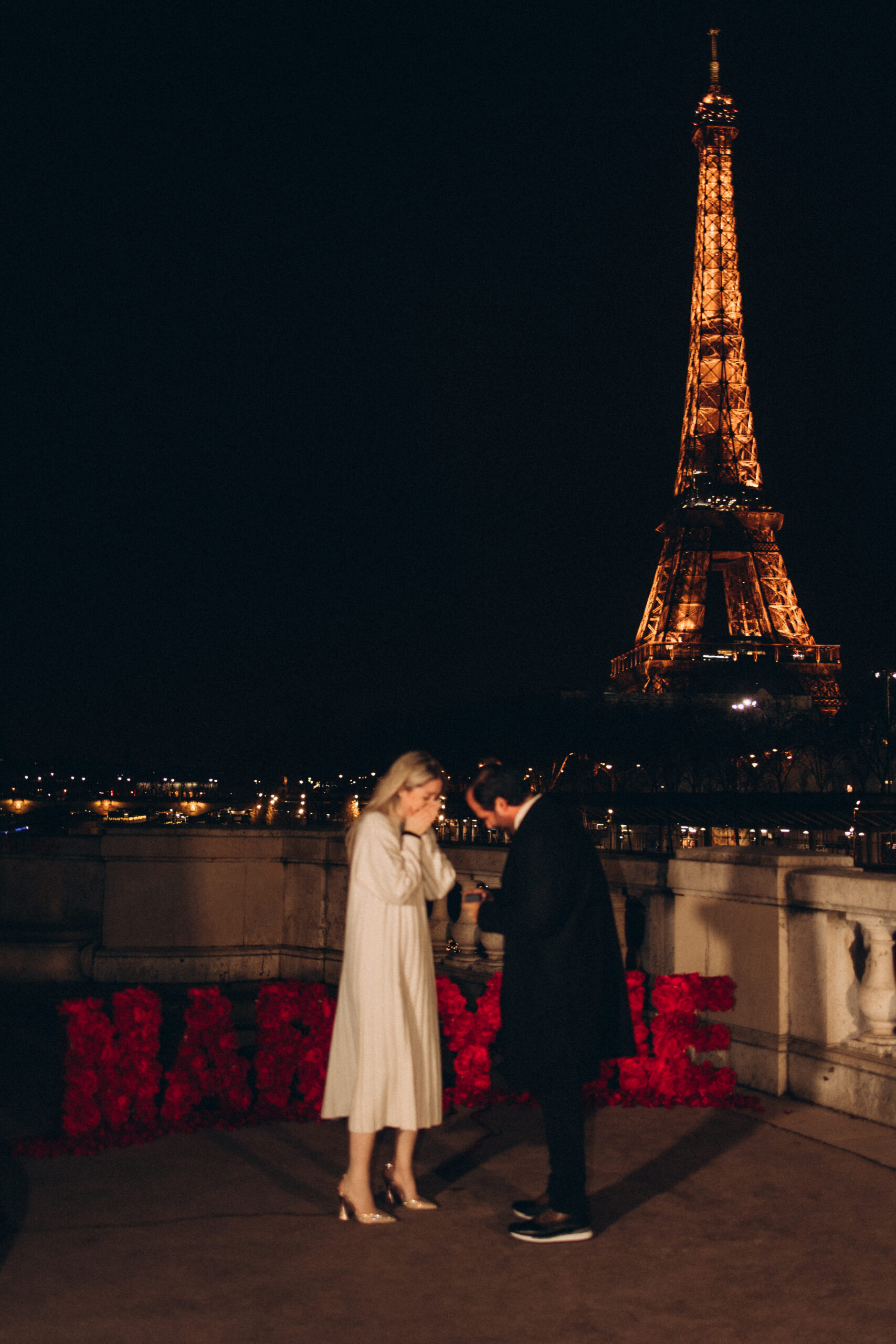
After years of hiding in plain sight with a camera, waiting for the exact half-second a life changes forever, I have gathered a collection of moments I will never forget. People ask me for ideas, but ideas feel too small a word. What I really carry are stories. So let me tell you seven of them, seven real ways a proposal in Paris can unfold, each one belonging to a couple who trusted me with the most important thirty seconds of their lives. Perhaps one of them will feel like yours.
1. The Dawn Proposal, When the City Belongs to You Alone
Most people imagine Paris crowded, and by ten in the morning they are right. But there is a secret hour, the one just before the sun clears the rooftops, when the most photographed city on earth belongs to almost no one. This is the hour Daniel chose.
He wrote to me months in advance, nervous in every message, terrified she would guess. His fear was that Sofia, sharp and curious and impossible to surprise, would see through any excuse to be at the Trocadéro at half past six in the morning. So we built a small, beautiful lie. He told her a friend had recommended a sunrise walk before their flight home, that the light was supposed to be unforgettable, that they would regret sleeping through their last morning in Paris. She grumbled, as anyone would. She came anyway.
I was already there when they arrived, tucked against the stone balustrade with a long lens, dressed like any other early photographer chasing the light. The gardens were silver and empty. Mist hung low over the fountains, and the Eiffel Tower stood pale gold against a sky just beginning to warm from grey to rose. There was not another soul in sight, no tour groups, no selfie sticks, no noise. Only the two of them, and the tower, and me holding my breath forty metres away.
Daniel walked her to the edge of the terrace, talking about nothing, his hands shaking so badly I could see it through the viewfinder. And then he simply stopped talking. Sofia turned to ask him why, and in that turning she found him already lowering to one knee, the ring catching the very first shaft of sunlight breaking over the buildings behind them. I will never forget her face in that frame. It went through disbelief, then a kind of collapse, then pure incandescent joy, all in the space of a single breath. She pressed both hands to her mouth. The city was so quiet I could hear her gasp from where I stood.
What makes the dawn proposal so extraordinary is not only the emptiness, though privacy is a gift beyond price when you are about to cry in front of the person you love most. It is the light. At sunrise the Parisian sky does something no lamp and no filter can imitate. It turns soft and directionless and impossibly flattering, wrapping everyone in a glow that looks almost lit from within. Skin looks luminous. Tears sparkle. The tower glows without the harsh contrast of midday, and every photograph feels like it was painted rather than taken.
There is a practical magic to it too. The famous spots that would be a wall of strangers by noon are yours to move through freely. We can stand exactly where the composition is perfect. We can take our time. Nobody wanders into the frame, nobody claps too early and spoils the surprise, nobody films it on a phone before you have even understood what is happening.
Sofia said yes before Daniel had finished the sentence. Afterward they sat on the cold stone steps as the sun rose properly, sharing the small bottle of champagne he had smuggled in his coat, laughing at how close she had come to refusing to get out of bed. A street sweeper passed and gave them a knowing smile, the only witness besides me and the tower. The gardens slowly began to fill, joggers first, then the earliest tourists, but by then the moment was already theirs, sealed and safe and captured. They made their flight with an hour to spare. She told me later that the photographs are the first thing she shows anyone who asks how it happened, because words, she said, could never hold that light. And that is the quiet secret of the dawn proposal: while the rest of the city sleeps, you steal the most beautiful hour of the day and make it yours alone, and no one, ever, can give it back or take it away.
2. The Fake Tourist, a Surprise Hidden in Plain Sight
Some of my favourite proposals are the ones where I am standing an arm’s length away and the person being proposed to has no idea I exist. This is the art of the fake tourist, and when it works, it is pure theatre.
The idea is simple and devious. I do not hide behind a tree or a lamppost, watching from a distance. Instead I become part of the scene itself. I approach the couple as an ordinary visitor, camera around my neck, and I ask them, in slightly clumsy English, whether they would mind taking a photo of me in front of the Eiffel Tower. It is the most normal request in the world. Thousands of tourists ask it every day. Nobody suspects a thing.
This is how it went with Marcus and Aiko. He had planned everything down to the minute, but Aiko was a photographer herself, and he was convinced she would spot a hidden lens instantly. So we decided to hide me by making me obvious. I walked up to them near the Pont de Bir-Hakeim, held out my own camera, and asked Aiko if she would be so kind as to take my picture. She agreed at once, warm and helpful, and stepped back to frame me against the tower.
While she was busy composing my portrait, concentrating on getting the shot right for a stranger, Marcus quietly took the ring from his pocket. And here is the beautiful trick. I was not really handing her my camera to be photographed. My own professional camera was already raised, and as she lowered mine to hand it back to me, I lifted mine and began to shoot. She turned to give me my camera and found, instead of a grateful tourist, Marcus down on one knee directly behind where she had been standing.
The confusion on her face in those first frames is something I treasure. For a full second she could not understand what was happening or why the awkward tourist was suddenly a professional firing off frame after frame. Then the pieces fell into place, the stranger, the setup, the man she loved kneeling on the bridge, and her whole body changed. She laughed and cried at the same time, that helpless overwhelmed sound that only comes when a surprise has landed perfectly.
The genius of the fake tourist is that it removes the one thing that ruins so many proposals: suspicion. The moment a partner senses a photographer lurking, the surprise begins to leak away. They start scanning the crowd. They wonder why you keep checking your watch. But nobody is suspicious of a lost tourist asking for a favour. I am absorbed seamlessly into the ten thousand other visitors around us, and my presence, far from being a warning sign, becomes part of the innocent everyday texture of the scene.
It also gives me a spectacular vantage point. Because the couple believes I am simply someone to be polite to, they behave completely naturally right up until the instant of the proposal. There is no stiffness, no posing, no self-consciousness. I capture the last few seconds of their ordinary life together, and then the exact moment it transforms, all from close range, all in sharp focus, all real.
Marcus and Aiko now have a series of images that begins with her kindly helping a stranger and ends with her saying yes to the love of her life, and the visual story those frames tell, the slow dawning realisation across her face, is more powerful than any single posed shot could ever be. Sometimes the best place to hide a surprise is directly in front of someone’s eyes.
3. The Rooftop Dinner That Ends in Light
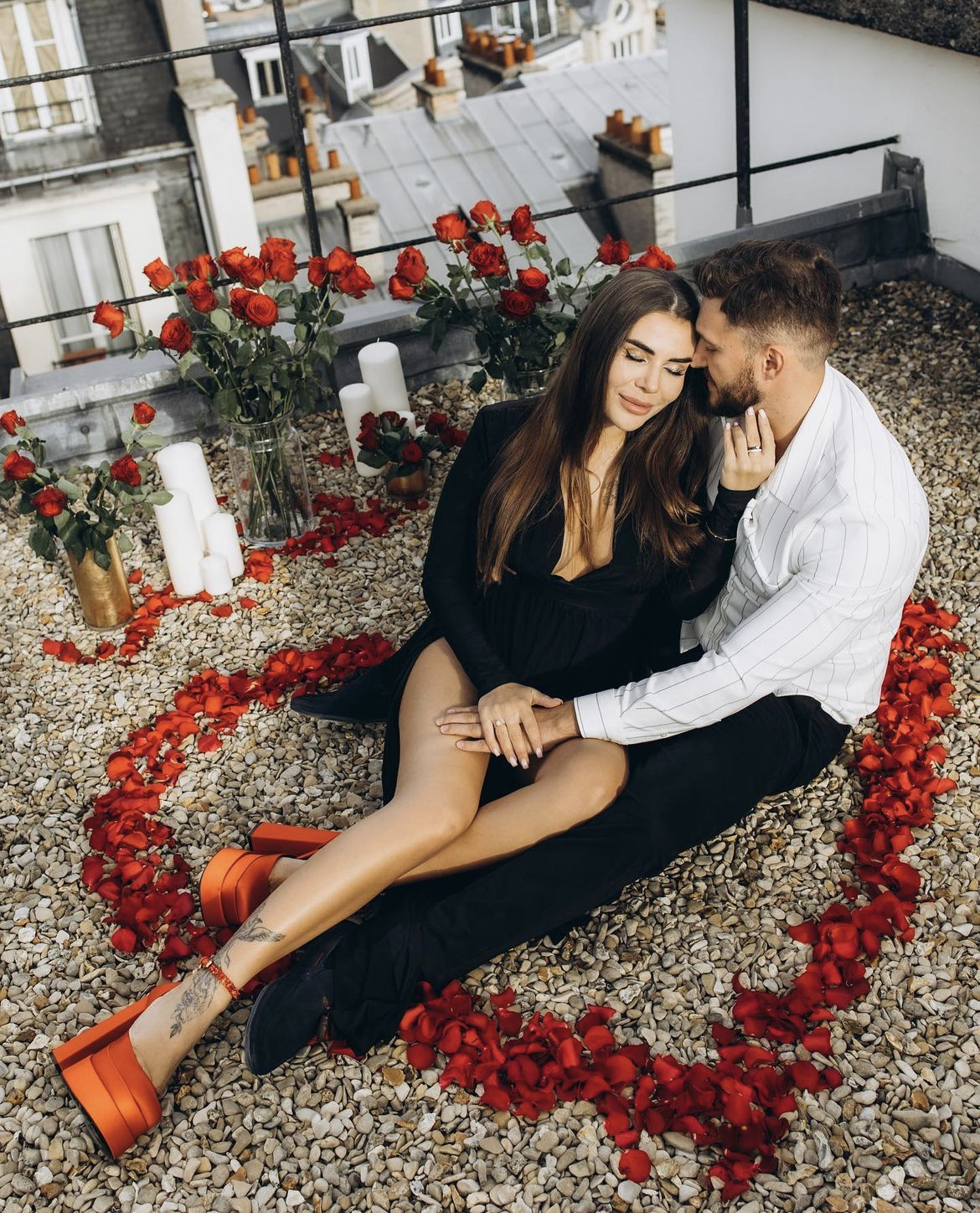
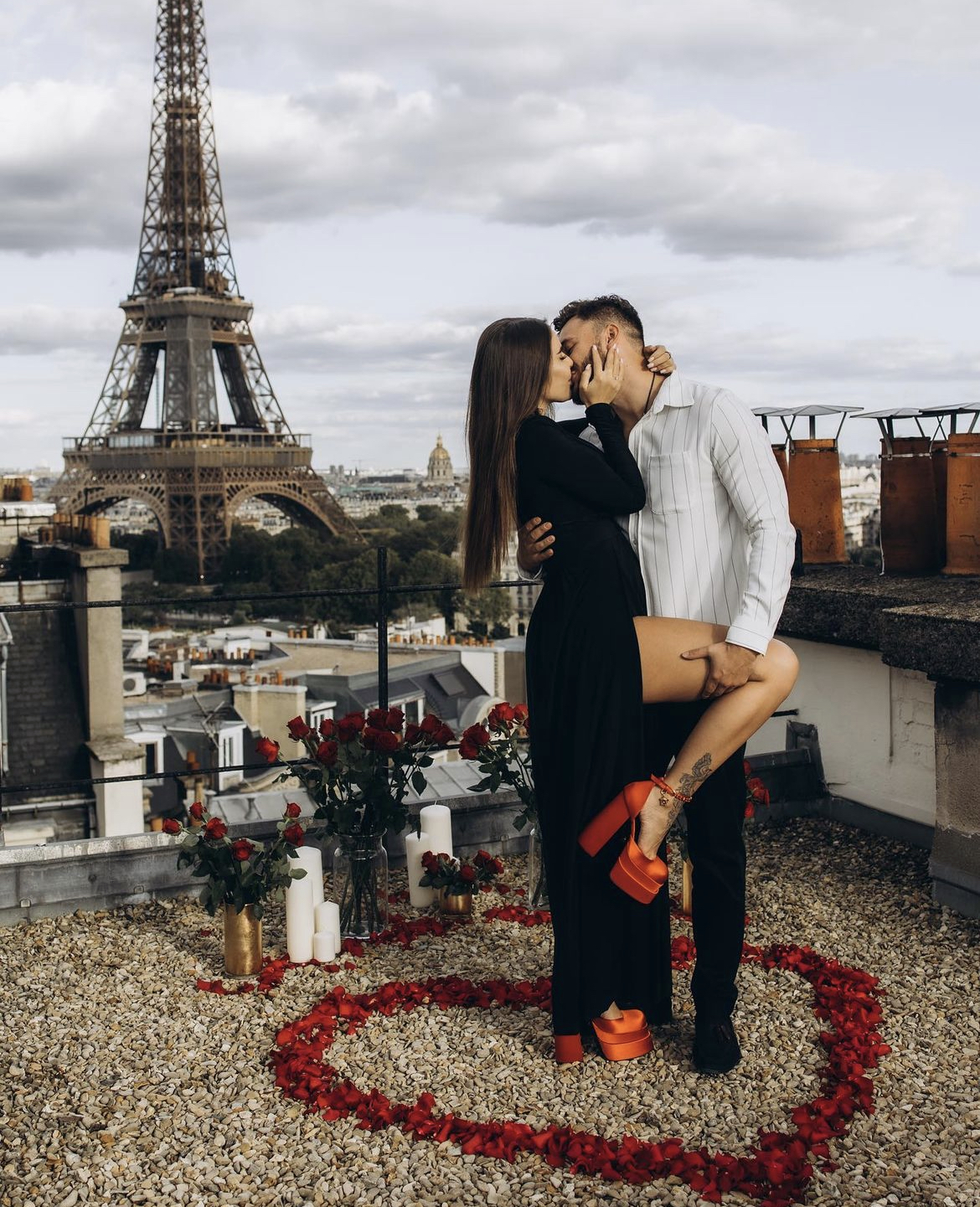
There is a particular kind of Parisian evening that exists only above the city, on the rooftops, where the chimneys stretch to the horizon and the Eiffel Tower rises out of the tangle of streets like something conjured. This is where Thomas decided to ask Elena to marry him, and it remains one of the most cinematic evenings I have ever photographed.
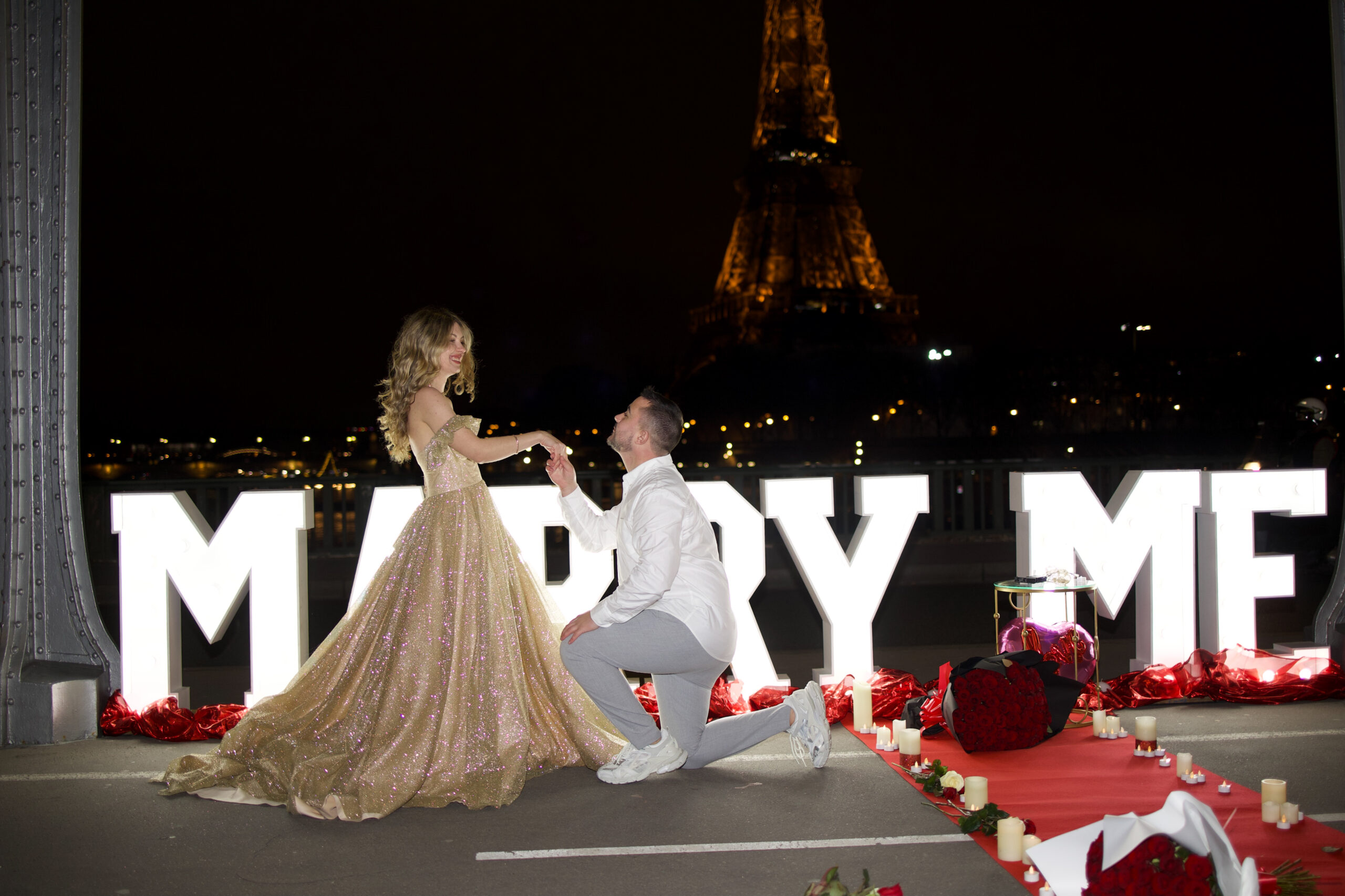
The plan was layered, like a good story should be. Thomas booked what Elena believed was simply a romantic rooftop dinner, a treat to celebrate the last night of their trip. And it truly was a dinner, candlelit, intimate, a small table set with flowers on a private terrace overlooking the whole glittering sprawl of Paris. But behind them, unseen in the fading light, a set of tall letters had been arranged, unlit, waiting. Four letters that would soon change everything.
I arrived before them and concealed myself at the edge of the terrace as the coordinator lit the candles and chilled the champagne. Elena had no idea. She thought the evening was exactly what it appeared to be, and for the first hour, it was. They ate, they laughed, they leaned close over the little table as the sun sank and the sky turned that deep bruised violet that Paris does so well. I photographed all of it quietly, the easy tenderness between two people who did not yet know the night was about to tip into legend.
The timing had to be exact. We waited for the blue hour, that narrow window when the sky still holds a little colour but the city lights have begun to burn. And then, at the agreed moment, Thomas rose and asked Elena to stand with him at the edge of the terrace to look at the view one last time. As she gazed out at the tower, he gave a small signal. Behind her, the letters flickered and blazed into light. MARRY ME, glowing warm and white against the darkening sky.
She did not see them at first. She was looking outward, at the Eiffel Tower beginning its hourly sparkle. It was the change in Thomas’s face that made her turn, and when she did, she found the words shining behind her and the man she loved already on one knee between them. The photograph I caught in that instant, Elena silhouetted against her own name written in light, one hand rising to her heart, is one I would hang in a gallery if it were mine to hang.
What I love about the rooftop-and-letters proposal is the sense of theatre it creates without ever feeling staged to the person at its centre. The dinner is real. The intimacy is real. The surprise is buried inside something that already feels special, so there is no suspicion to overcome, only a gentle unfolding of one wonder into a greater one. First a beautiful evening. Then, suddenly, the most important question of her life, framed in light with the whole of Paris as witness below.
The rooftop also solves a problem that the ground cannot. Up there, above the crowds, you have privacy and grandeur at the same time, a rare and precious combination. There are no strangers wandering through your moment, no noise, no interruption. Just the two of you, the candles, the glowing letters, and the tower sparkling its approval in the distance.
Elena said yes with tears streaming, and then they danced, just the two of them, on a rooftop above a million Parisian lights, to music playing softly from a small speaker. I kept shooting until the tower’s sparkle faded and the champagne was gone. Some nights are so beautiful you almost cannot believe they were real. The photographs are how they prove, forever, that it was.
4. The Boat on the Seine, a Question Carried by the River
Paris looks like one city from its streets and an entirely different, more magical one from its river. To propose on the Seine is to ask the question while the whole of Paris drifts slowly past like a dream, and it is one of the most romantic settings I have ever had the privilege to photograph.
Julien wanted something that would feel like it belonged only to them, away from the crowds, cradled by the water. He arranged a private boat, small and elegant, strewn with red roses and rose petals, and told Priya only that he had booked a sunset cruise as a surprise. She adored the idea, never suspecting it held a deeper surprise still. I boarded separately and positioned myself at the bow, a quiet presence with a camera she assumed had simply come with the boat.
The light on the Seine at golden hour is something I could photograph for the rest of my life and never tire of. The water throws the sunset back into the air, doubling it, so the couple is lit from above and below at once, wrapped in a warm shimmering glow. As the boat slipped beneath the bridges, each one framing them for a heartbeat before releasing them again, I worked steadily, gathering the easy joy of two people in love on a beautiful evening, neither of them yet aware of what was coming.
Julien had chosen his moment with care. He waited until the boat rounded the bend and the Eiffel Tower came fully into view, rising golden above the water directly behind them. As Priya gazed at it, he took her hand, and when she turned back to him, she found him holding the ring, the tower blazing over his shoulder, the river carrying them gently forward as though even Paris itself were leaning in to listen.
The photographs from that sequence are among my favourites precisely because of the movement. On the water, nothing is still. The boat rocks softly, the light dances, the city slides by, and all of that motion gives the images a living, breathing quality that a static location on land can never quite match. Priya’s veil of dark hair lifting in the river breeze, the petals scattered around their feet, the reflection of the tower rippling on the water beside them, every element was in gentle motion, and the whole scene felt less like a photograph and more like a held moment from a film.
She said yes, of course, and then she laughed and cried and kept lifting her hand to look at the ring as though she could not quite believe it was real, the tower glowing behind her the entire time. They kissed as the boat carried them onward, and I kept my distance and let them have those first private minutes as newly promised, catching them from the bow while the sun melted into the river.
There is something profoundly symbolic about a proposal on the Seine that couples feel even when they cannot name it. The river has flowed through Paris for two thousand years, watching lovers come and go, carrying the city’s stories out to sea. To add your own question to that ancient current, to say the words while the water moves beneath you, is to feel, just for a moment, part of something far larger and older than yourselves.
The practical gifts are real too. On a private boat there is no crowd at all, no possibility of a stranger blundering into the frame, no noise but the water and the low hum of the engine. You have complete privacy and a constantly changing backdrop, the entire monumental heart of Paris parading past behind you. By the time they stepped back onto dry land, engaged, the sky had gone fully dark and the tower was sparkling. Priya told me she still cannot cross a bridge over the Seine without smiling.
5. The Rainy-Day Proposal, Beauty Where Others See Ruin
Everyone dreams of sunshine, and then it rains, and most people panic. I have learned the opposite. Some of the most breathtaking proposals I have ever photographed happened under grey skies and falling rain, and one of them belonged to Oliver and Grace.
The forecast that morning was merciless. Steady rain, no chance of clearing, exactly the weather every couple prays against. Oliver called me in despair, ready to postpone, certain his carefully planned proposal was ruined. I told him what I tell everyone in that moment: trust me, and let it rain. Rain, I promised him, would give him something the sun never could.
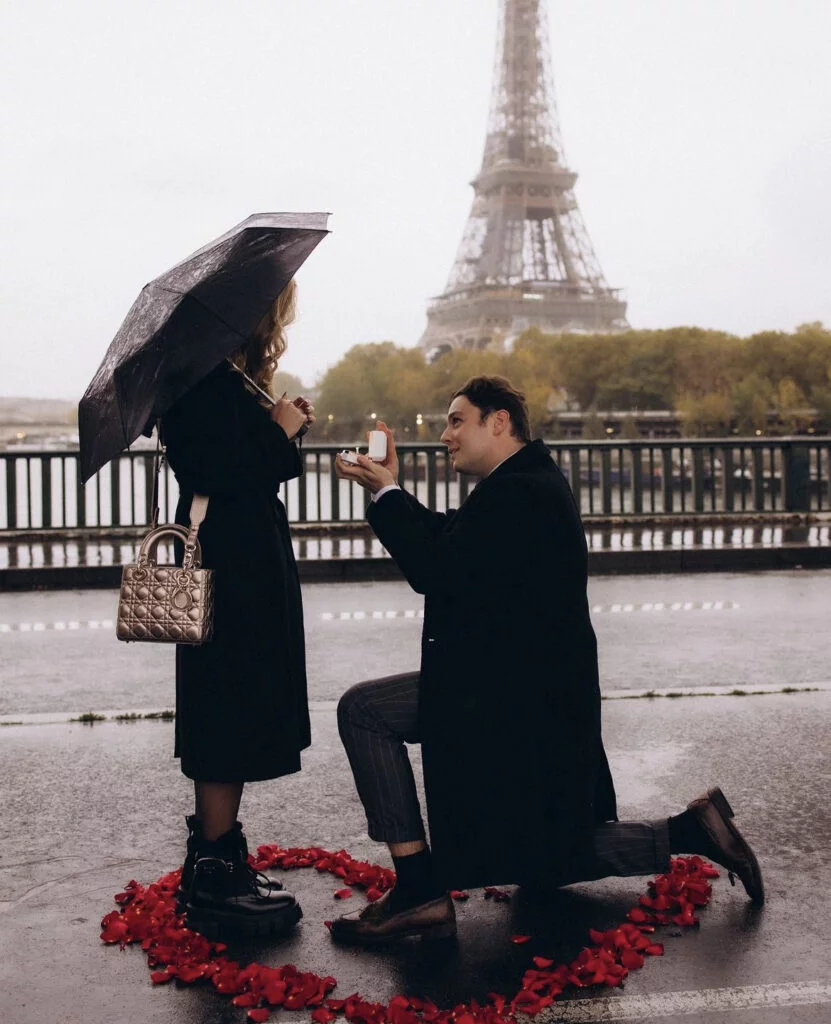
We kept the plan. Grace believed they were simply braving the weather for a walk near the Eiffel Tower, and she came bundled in a dark coat, sheltering under a single black umbrella, faintly annoyed at the drizzle, entirely unsuspecting. I was waiting near the Bir-Hakeim bridge, and I had done one small thing in advance. On the wet stone I had laid a heart of deep red rose petals, and the rain, rather than spoiling them, had darkened and burnished them until they glowed like garnets against the grey.
When Oliver led Grace into the centre of that heart and dropped to one knee on the soaking ground, the whole world seemed to hold its breath. She stood frozen under her umbrella, the ring held up to her in the falling rain, the Eiffel Tower rising soft and veiled through the mist behind them. And here is the thing the sun could never have given: atmosphere. The rain turned the pavement into a mirror, doubling the tower, the petals, the two of them, in the wet stone below. The mist wrapped the tower in mystery, softening its hard iron lines into something dreamlike. The colours went rich and deep and saturated, the red of the petals almost violent against all that silver and grey.
Grace cried, and in the rain her tears were indistinguishable from the drops on her cheeks, and somehow that made the whole thing more beautiful still. She said yes and pulled him up and they kissed under the single umbrella, sheltered together in their own small dry world while Paris wept romantically around them. I moved around them catching the reflections, the mist, the petals, the umbrella like a dark halo above their embrace.
The photographs from that rainy morning are, without exaggeration, some of the most cinematic I have ever taken. There is a moodiness to them, a depth and drama, that a bright blue sky simply cannot produce. Bright sun flattens everything and scatters harsh shadows. Rain does the opposite. It saturates colour, softens light, adds reflection and texture and mood, and clears the crowds so completely that the famous spots fall silent and empty. On a sunny Saturday the Bir-Hakeim bridge is thronged. That rainy morning, Oliver and Grace had it entirely to themselves.
There is a metaphor in it too, and couples always find it afterward. To choose each other in the rain, to kneel in the wet and say yes anyway, laughing, soaked, radiant, is a small perfect promise about the marriage to come. Not every day will be sunny. What matters is that you stand together in the weather and find it beautiful.
Grace told me later that she is fiercely glad it rained. The sunny version, she said, would have been lovely, but ordinary. The rainy one was theirs alone, strange and moody and unrepeatable, and no other couple in the world has photographs quite like it. When the skies open on your proposal day, do not despair. Sometimes the storm is the gift.
6. The Photoshoot Gift, a Surprise Wrapped in a Surprise
This is perhaps the most cunning idea of all, because it hides the proposal inside something that already looks like the whole surprise. It is the proposal disguised as a gift, and it is devastatingly effective.
Here is how it works. One partner books what appears to be a romantic couple’s photoshoot in Paris, presented as a lovely present, a way to capture the trip, a treat to celebrate an anniversary or simply the joy of being in the most beautiful city in the world together. The other partner is delighted but entirely unsuspecting. Why would they suspect anything? They have been told exactly what is happening. They are going to have some nice photos taken by the Eiffel Tower. The surprise, they believe, is already complete.
This was Nathan’s plan for Chloe, and it was flawless in its simplicity. He told her he had booked a photographer as a surprise gift for their fifth anniversary, so they would finally have beautiful pictures of themselves in Paris instead of blurry phone snaps. Chloe was thrilled. She spent the morning choosing an outfit, excited and relaxed, with no reason on earth to be nervous, because she thought she already knew everything that was about to happen.
We began the session exactly as any couple’s shoot would. I posed them, guided them, made them laugh, gathered lovely natural images of the two of them together against the tower. Chloe was completely at ease, playing to the camera, enjoying her gift, utterly unaware. And this ease is the secret weapon of the photoshoot proposal. Because she believed the photographer was the whole point, she behaved with total naturalness. There was no suspicion to fight, no wondering why a camera was present, no scanning the crowd. The one detail that so often betrays a hidden proposal, the presence of a photographer, was here explained away perfectly. I was supposed to be there.
Then, about twenty minutes in, at a moment I had rehearsed with Nathan, I asked them to do a particular pose. I asked Chloe to look out at the tower while Nathan stood behind her. As she turned to face the view, Nathan sank to one knee behind her and took out the ring. I raised my camera and said, gently, “Chloe, turn around.” She turned, expecting another pose. She found him kneeling.
The photographs of that instant are extraordinary, because I was already perfectly positioned, already focused, already shooting, in a way that is impossible when a photographer is hiding in a crowd. I caught the exact frame her expression broke open, the shift from playful posing to total shock to overwhelming joy, all in crisp detail from the ideal angle. There was no fumbling, no missed moment, no distant grainy shot. Everything was ready, because everyone but Chloe knew what was coming.
The beauty of the photoshoot gift is that it delivers two surprises in one. First the delight of the gifted session, and then, hidden inside it like a jewel in a box, the far greater surprise of the proposal. It disarms the one being proposed to completely. They arrive happy and unguarded, expecting nothing more than nice pictures, and they leave engaged, with the entire transformation captured from the very first second by a photographer who was, unbeknownst to them, in on it all along.
Chloe told me afterward that she keeps replaying the moment in her mind, marvelling at how she never once suspected. She had been so pleased with her thoughtful gift that it never occurred to her the gift was hiding a far bigger one. Nathan had wrapped a proposal inside a present, and the wrapping was so convincing she opened it with a smile, never dreaming what waited within.
7. The Letter, When Words Become the Whole World
Of all seven, this is my quiet favourite, the one that undoes me every single time, no matter how many I witness. It is the simplest of them all. No grand setup, no glowing letters, no boat. Just a man, a woman, a piece of paper, and words written from the deepest part of the heart.
David was not a showy person. He came to me wanting nothing elaborate, no letters, no letters spelled in flowers, no fanfare. What he wanted was to read Hannah something he had written, and to have that moment, and only that moment, captured. He had spent weeks on the letter. He told me he had rewritten it a dozen times, that he had cried writing it, that he did not know if he could get through reading it aloud without breaking down.
We chose a quiet corner near the Champ de Mars, away from the densest crowds, where the tower stood tall and golden above the trees. Hannah thought they were simply taking a walk before dinner. When David stopped, took a folded page from his coat, and began to read, she went very still. She did not yet understand what was happening. She only knew that the man she loved was reading her something with a trembling voice, and that his hands were shaking.
I have photographed hundreds of proposals, and I can tell you that nothing, nothing, produces an emotional reaction like a letter. The grand gestures dazzle, but the letter reaches somewhere deeper. Because in a letter, a person lays themselves completely bare. David read about the first time he saw Hannah, about a small ordinary Tuesday when he realised he loved her, about the future he wanted, the mornings, the arguments, the growing old. He read about her laugh and her kindness and the way she made a foreign city feel like home. And with every sentence, I watched Hannah’s composure dissolve.
This is the gift of the letter for a photographer. The emotion is not a single flash at the moment of kneeling. It is a slow, gathering wave. I watched it build across Hannah’s face frame by frame, the first widening of the eyes as she understood what this was, the hand rising slowly to her mouth, the tears starting somewhere around the third sentence, the way she reached out to touch him as though to steady herself. By the time David reached the last line, the line where he asked her to marry him, she was already weeping openly, and so, I confess, was I, quietly, behind my camera.
He knelt only at the very end, after the words, because with a letter the words are the proposal and the kneeling is merely the punctuation. And the photographs I gathered across those few minutes tell a complete emotional story in a way a single posed shot never could. You can see, in sequence, a woman falling in love all over again in real time, undone by hearing exactly how deeply she is cherished.
The letter proposal proves something I believe with my whole heart: that the setting, however beautiful, is never really the point. Paris is the frame, but the picture is always the two of you. The Eiffel Tower can rise gold behind you, the Seine can shimmer, the rooftops can glow, and all of it matters, all of it is magnificent. But the thing that makes a proposal unforgettable, the thing that makes me lower my camera afterward with my own eyes wet, is love spoken plainly and truly between two people.
Hannah kept the letter. She had it framed, David told me later, and it hangs in their home beside the photographs. The words and the images together, the promise and the proof of it. Of all the ideas I could ever offer you, this is the one I would whisper last and mean the most: whatever you plan, however you surprise her, do not forget to tell her, in your own words, exactly why. Paris will hold the rest.